
Two routes to the summit
Climbers reach the top of Mount Everest by two classic routes. The South Col route starts in Nepal and follows the route of the British expedition of 1953. The North Ridge starts in Tibet and depends on permits from the Chinese authorities.
A summit attempt is an expedition of several weeks, not a long hike. Time goes into acclimatization, rotations between camps and waiting for a weather window. This page describes the routes as operators publish them, the season and the rules. It is an overview, not a training plan, and it does not recommend an operator. If you only want to see the mountain, the tours page compares gentler options.
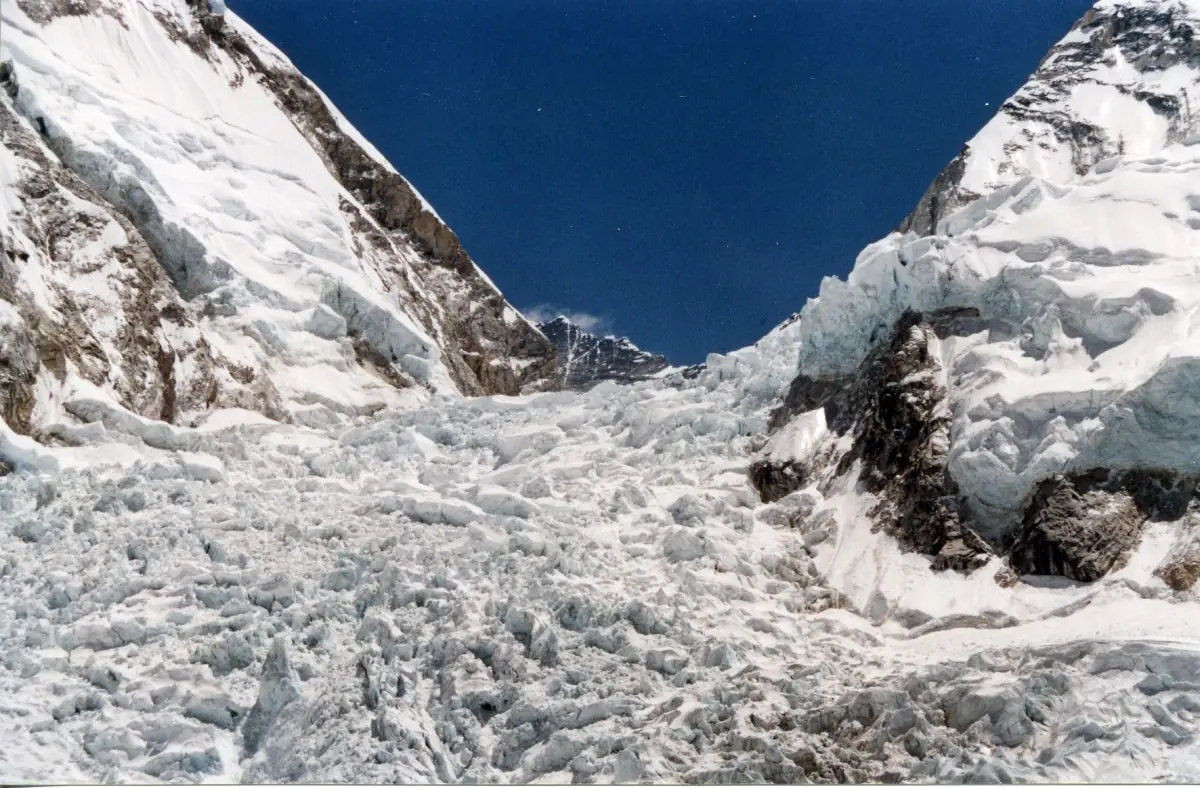
South Col route (Nepal)
The route runs from the Khumbu Icefall up the Western Cwm to the South Col and the summit.
1. Khumbu Icefall to Camp I
The route starts in the Khumbu Icefall, a moving glacier with crevasses. In one operator's program Camp I sits at 5,971 m. Fixed ropes and ladders do not remove the hazards of ice and avalanches.
2. Western Cwm and Camp II
The route continues through the Western Cwm. Camp II lies at 6,492 m in the same program.
3. Lhotse Face and Camp III
The Lhotse Face leads to Camp III at 7,162 m in that program. Climbers spend several rotations between camps to adapt to the altitude.
4. South Col, Southeast Ridge and summit
Camp IV stands on the South Col, the pass between Everest and Lhotse. From there the Southeast Ridge leads to the summit.
The camp heights are taken from one operator's program, not from fixed official points, and other programs can number and place camps differently. The same operator advertises 5 April to 25 May 2027. Acclimatization, rotations and waiting days are part of that time, so do not count only the days of the summit push.
Mount Everest tours and flights
If a summit attempt is not for you, these mountain flights, helicopter trips and treks show the mountain from the air or a viewpoint.
North Ridge route (Tibet)
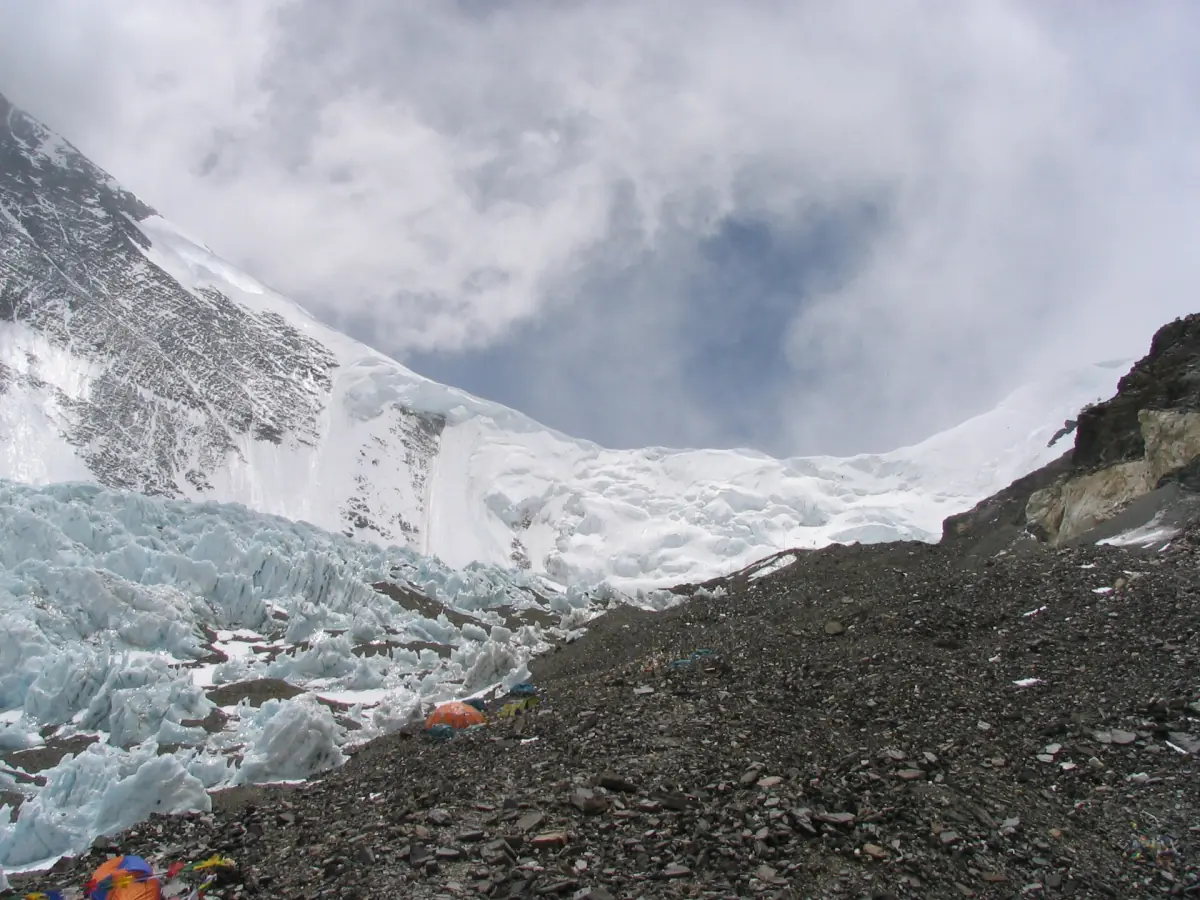
The north side is reached through Rongbuk and the East Rongbuk valley. From the Advanced Base Camp the route climbs to the North Col, follows the North Ridge and then the upper northeast ridge, where the Three Steps lie before the summit.
In one operator's program the Advanced Base Camp stands at 6,492 m, the North Col at 7,010 m, Camp II at 7,544 m and Camp III at 8,138 m. Other programs can set the heights and the camp numbers differently. That operator also advertises a rapid ascent program of 36 days, from 25 April to 30 May 2027. It is a special format and not a minimum length for beginners.
Access depends on permits. The Associated Press reported the Chinese route closed in spring 2026. A program advertised for 2027 does not show that the route is open today. The Tibet page explains the permits and the viewing side of the north.
The two routes compared
Details are from operator programs advertised for 2027.
| South Col (Nepal) | North Ridge (Tibet) | |
|---|---|---|
| Start | Khumbu Icefall | Rongbuk and Advanced Base Camp |
| Key passes | Western Cwm, Lhotse Face, South Col | North Col, North Ridge, Three Steps |
| Camp II | 6,492 m | 7,544 m |
| Camp III | 7,162 m | 8,138 m |
| Example schedule | 5 April to 25 May 2027 | 25 April to 30 May 2027 (36 days, rapid ascent) |
| Access | Nepal permit, see costs | Depends on Chinese permits |
Season and success figures
Spring is the main season.
The Nepalese season runs to the end of May, according to a report in April 2026. Summit attempts concentrate on weather windows in May. A separate autumn fee exists, but that does not make autumn equal to spring, and a commercial program is not guaranteed in autumn. Weather and wind are on the weather page.
For spring 2026 Nepal reported 1,008 successful ascents, as of 29 May 2026. That number counts everyone who reached the top, including people who work on the mountain, and it is not a success rate for clients. There is no reliable ratio for 2025 or 2026 that you can use for your own chances, so do not divide permit holders by summits.
A climb carries serious risk. The deaths page explains what the figures cover and why they are not personal odds. Long waits on the fixed ropes can add time at high altitude in bad weather, and the Associated Press reported in May 2026 that Kami Rita called for limits on the crowds.
Rules in Nepal
What was reported, and what is still open.
No solo expeditions
A press report of 5 February 2025 says that solo expeditions are banned. Above 8,000 m there must be at least one guide for every two climbers. The report refers to the Nepal Gazette, so treat it as a reported rule.
Waste goes down
The same report says that waste, including human waste, has to be carried back to base camp, with biodegradable bags for the high camps.
Experience requirement
In July 2026 the press still reported different proposals, including an earlier climb above 7,000 m. So far this is a proposal, not a rule in force. Check the current requirements before you plan.
Permit and trekking permits
The summit permit is separate from trekking permits. The summit fee is on the cost page, and the trekking permits are covered at Everest trekking permits.
Climbing Mount Everest: frequently asked questions
How long does an Everest expedition take?
Longer than the summit push. One operator advertises 5 April to 25 May 2027 for the South Col route, and a rapid ascent on the north side of 36 days. Acclimatization, rotations and waiting for a weather window are part of the time.
When is the climbing season?
Spring. The Nepalese season runs to the end of May, and summit attempts concentrate on weather windows in May. An autumn fee exists, but a commercial program is not guaranteed.
Can I climb Mount Everest alone?
Not on the Nepal side, according to a press report of 5 February 2025: solo expeditions are banned, and above 8,000 m there must be at least one guide for every two climbers.
Do I need to have climbed a 7,000 m peak first?
So far this is a proposal, not a rule in force. In July 2026 the press still reported different proposals, including an earlier climb above 7,000 m. Check the current requirements before you plan.
Which route is better, south or north?
That depends on permits, budget and experience, and neither is simple. The south route passes the Khumbu Icefall. The north route has the Three Steps and depends on Chinese permits.
Who has climbed Everest the most?
Kami Rita made his 32nd ascent in May 2026, according to Guinness World Records. Lhakpa Sherpa holds the women's record with 11 ascents.